
by Christophe Cadiou, CPA and CFP®
Retirement isn’t just about reaching a number—it’s about making sure your investments can support you for the long run. And right now, that’s more complex than it’s been in quite some time.
We are in a moment of transition: interest rates remain at levels we haven’t seen in over a decade, inflation—while easing—is still elevated, and markets continue to react to a wide range of global and economic developments. Layered onto that is economic policy uncertainty, from tariffs to changing tax rules, all of which can influence portfolio performance and investor confidence.
For those approaching retirement—or already in the early years of it—this environment makes it especially important to revisit whether your investment strategy is still aligned with your income needs, risk appetite, and long-term goals. Research on retirement outcomes shows that investment returns during the first few years of retirement play an outsized role in determining how long a portfolio will last—making this early phase especially critical for thoughtful planning
Focus on What You Can Control
No one can predict markets, interest rates, or headlines with precision. But what you can control often matters more:
- Your costs: High fees can erode returns over A low-cost portfolio gives your money more room to grow.
- Your allocation: The balance between stocks, bonds, and cash should reflect your time horizon, income needs, and ability to tolerate risk—not just your age.
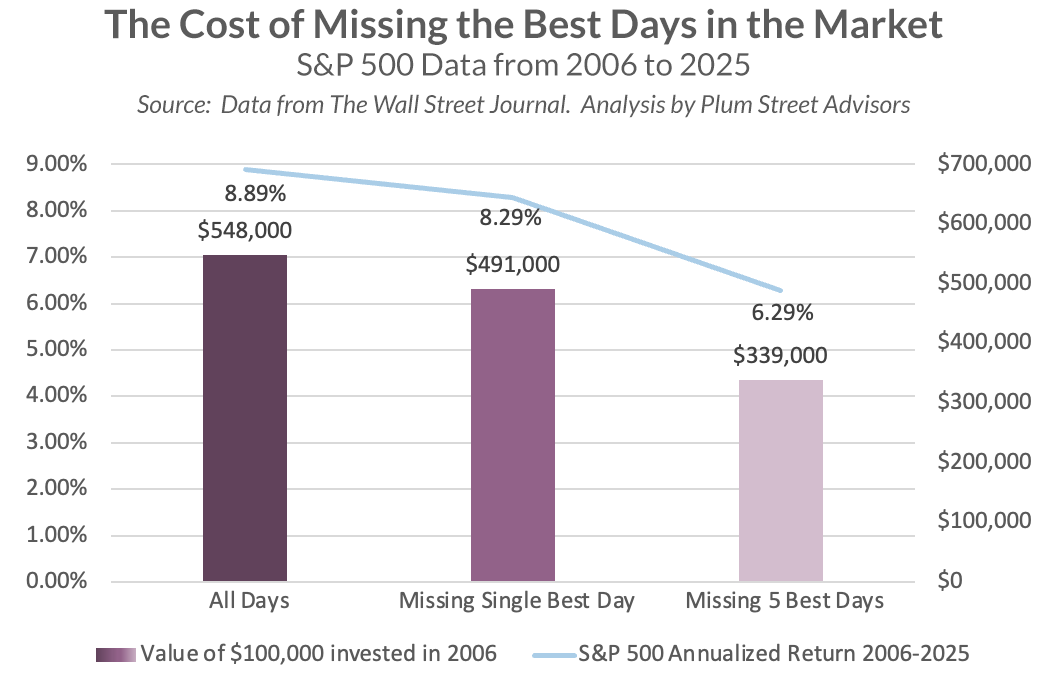
- Your discipline: Staying invested through periods of volatility has consistently outperformed attempts to time the market.
The Risk of Sitting on the Sidelines
Market history shows how missing just a few strong days can significantly impact long-term results:
Why Investment Strategy Shouldn’t Stand Alone
A sound portfolio is just one part of a well-integrated financial plan. Planning helps answer critical questions like:
- How much risk do I actually need to take?
- What’s the best order to draw from my accounts?
- How can I prepare for both downturns and opportunities over the next decade?
At Plum Street Advisors, we believe investment strategy should flow from the plan, not the other way around. When yourportfolio is grounded in a thoughtful, personalized plan, it’s easier to stay on course, especially when markets test your resolve.
Why Rules of Thumb Aren’t Enough
There are many generalized “rules of thumb” that are popular in financial media. Some of these include:
- Limit retirement spending to 4% of your portfolio
- Save enough for 80% of your pre-retirement spending
- Save 15% of your salary every year
These approximations make for good magazine articles, and they may even be somewhat helpful on average, but they are not specific enough for individual circumstances. The right answer depends on things like when you retire, whether you have amortgage at retirement and whether you plan to downsize, whether your investments are pre-tax or after tax, when you’ll take social security, and many other factors.
A Quick Gut Check
If you’re asking:
- Is my portfolio still right for this stage of life?
- Do I have enough stability to meet income needs in a downturn?
- Is my plan built to adapt as markets, policies, and life circumstances evolve?
…it may be a good time to review your strategy, because peace of mind starts with a plan.